Salt Lake City Epoxy Flooring wrote this guide for property owners who want a ballpark before asking for quotes. Epoxy pricing depends on floor size, the condition of the concrete, and the system you choose. The national figures below are a good place to start.
Published price ranges
- Angi puts the average epoxy floor at $2,430, with most jobs between $730 and $5,300.
- Angi lists a one-car garage at $720 to $2,900 and a two-car garage, about 360 square feet, at $1,100 to $4,300.
- This Old House lists professional epoxy at $3 to $12 per square foot, materials and labor included.
- Metallic epoxy runs $5 to $12 per square foot, per Angi.
- Bob Vila puts polyaspartic coatings at $4 to $9 per square foot.
What moves the price
Floor size
Bigger floors cost more in total, but often less per square foot, since setup costs are spread out.
Slab condition
Cracks, pits, oil stains, and old coatings all need work before new epoxy goes down. Prep is often the biggest swing between quotes.
Moisture
Concrete that holds moisture can push coatings off. A moisture test may be needed, and a moisture barrier primer adds to the price, so ask your installer to quote it separately.
System and finish
A single solid color costs less than flake, quartz, or metallic finishes. Extra coats and topcoats add to the price but also to durability.
Garage, basement, or shop
Garages see hot tires, road salt, and dripping slush in winter. Basements may deal with moisture. Shops and warehouses need coatings that stand up to heavy loads and chemicals. Each use calls for a slightly different system, which is why one price rarely fits every floor.
How to compare quotes
- Ask how the floor will be prepared, such as grinding or shot blasting.
- Ask how many coats are included and how thick they are.
- Check whether crack repair is included.
- Get the warranty terms in writing.
A lower price often means less prep or thinner coats, and those are the most common reasons coatings fail early.
What a typical project looks like
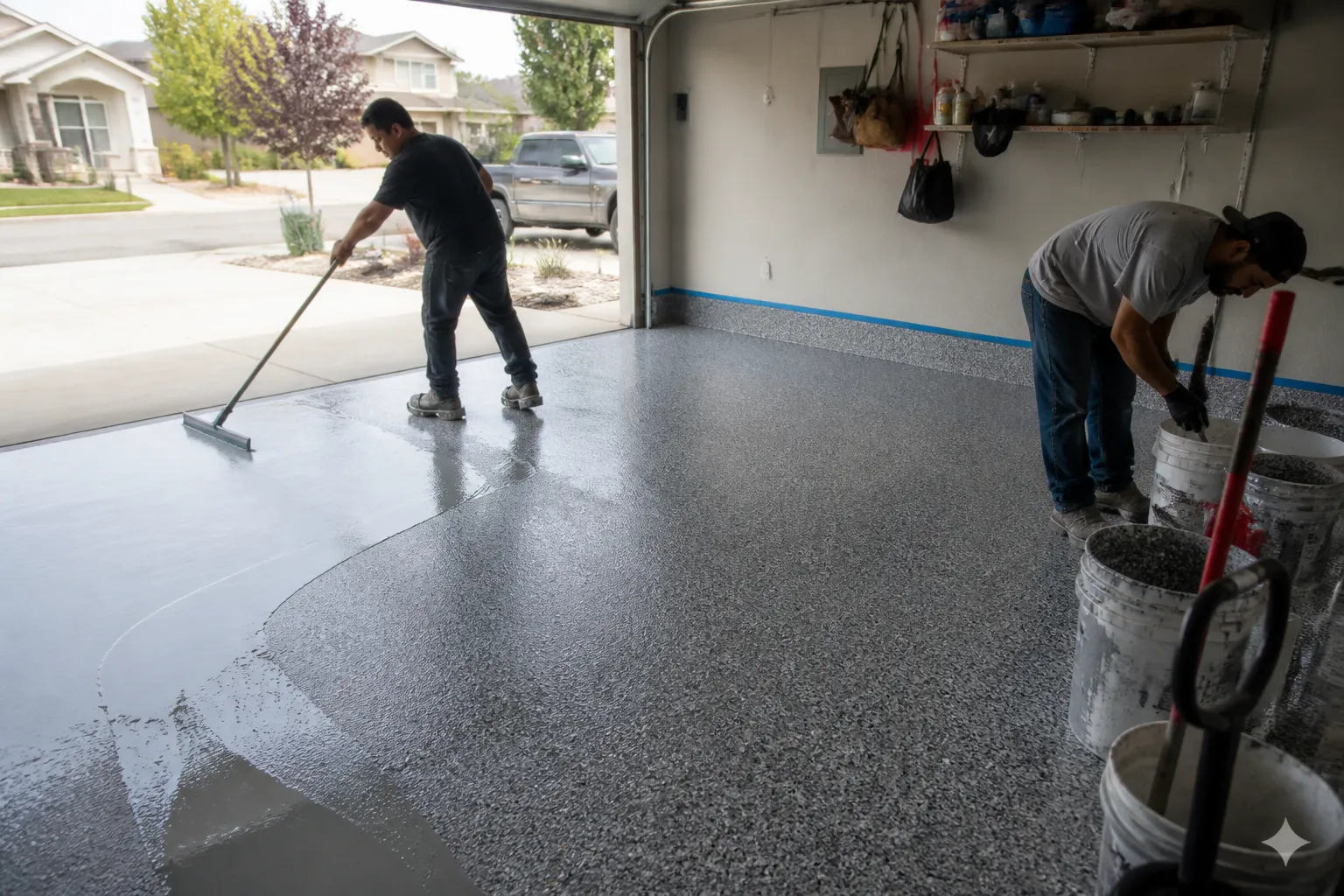
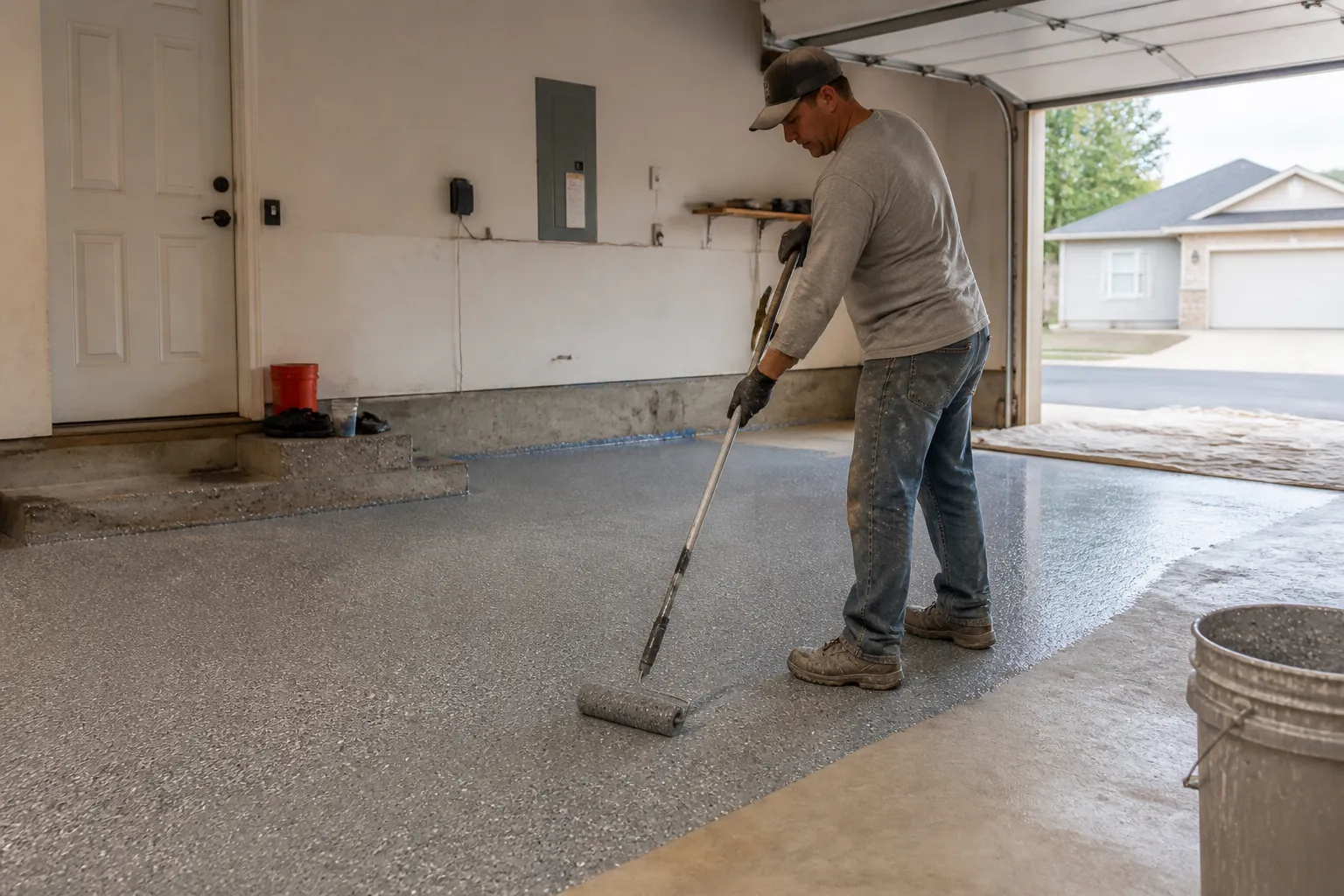
Most garage coating jobs follow a similar path. The crew moves items out, then grinds the slab to open the surface so the coating can grip. Cracks and pits are filled and smoothed. The base coat goes down, followed by flakes or color if you chose them, and than a clear topcoat. Cure times vary by product, so ask when you can walk on the floor and when you can park on it.
Planning around Utah weather
Temperature and humidity affect how coatings cure. Very cold slabs can slow curing, so some products have minimum temperature limits. Your installer can tell you the best window for your project and whether heating the garage during install is needed.
Getting the most value
- Choose a system that fits how you use the space, not just how it looks.
- Do not skip crack repair or moisture testing to save money.
- Ask about anti-slip additives if the floor gets wet from snow or washing.
Epoxy compared with other floor options
Epoxy is not the only way to finish concrete. HomeAdvisor, an Angi company, lists polished concrete at $2 to $16 per square foot, and staining at $2 to $10 per square foot. HomeAdvisor puts professional concrete sealing at $1.35 to $2.50 per square foot. A clear sealer costs less but offers less protection from oil, salt, and wear. Epoxy and similar coatings build a thicker layer on top, which is why they are popular for garages and shops.
Ongoing upkeep
Coated floors are easy to clean, which saves time over the years. Sweep often, wash with mild soap, and rinse off winter salt. Some systems can be refreshed with a new topcoat later instead of starting over. Ask your installer whether that is an option for the system you choose.
Budgeting tips
- Measure your floor so you can sanity-check per-square-foot quotes.
- Ask for prep, repairs, and coating listed separately.
- Choose a simpler finish if the budget is tight. Solid colors usually cost less than metallic or quartz.
- Plan for a few days without using the space.
Getting an accurate quote
A site visit lets the installer measure the floor, check moisture, and see cracks or old coatings. That turns these national ranges into a real number for your space.
Common questions
How long does an epoxy floor last?
It depends on use, prep, and the system. Good prep makes the biggest difference.
Is epoxy cheaper than polyaspartic?
Basic epoxy often costs less, but prices overlap depending on the system.
Can epoxy go over old coatings?
Usually the old coating needs to be ground off so the new one bonds.