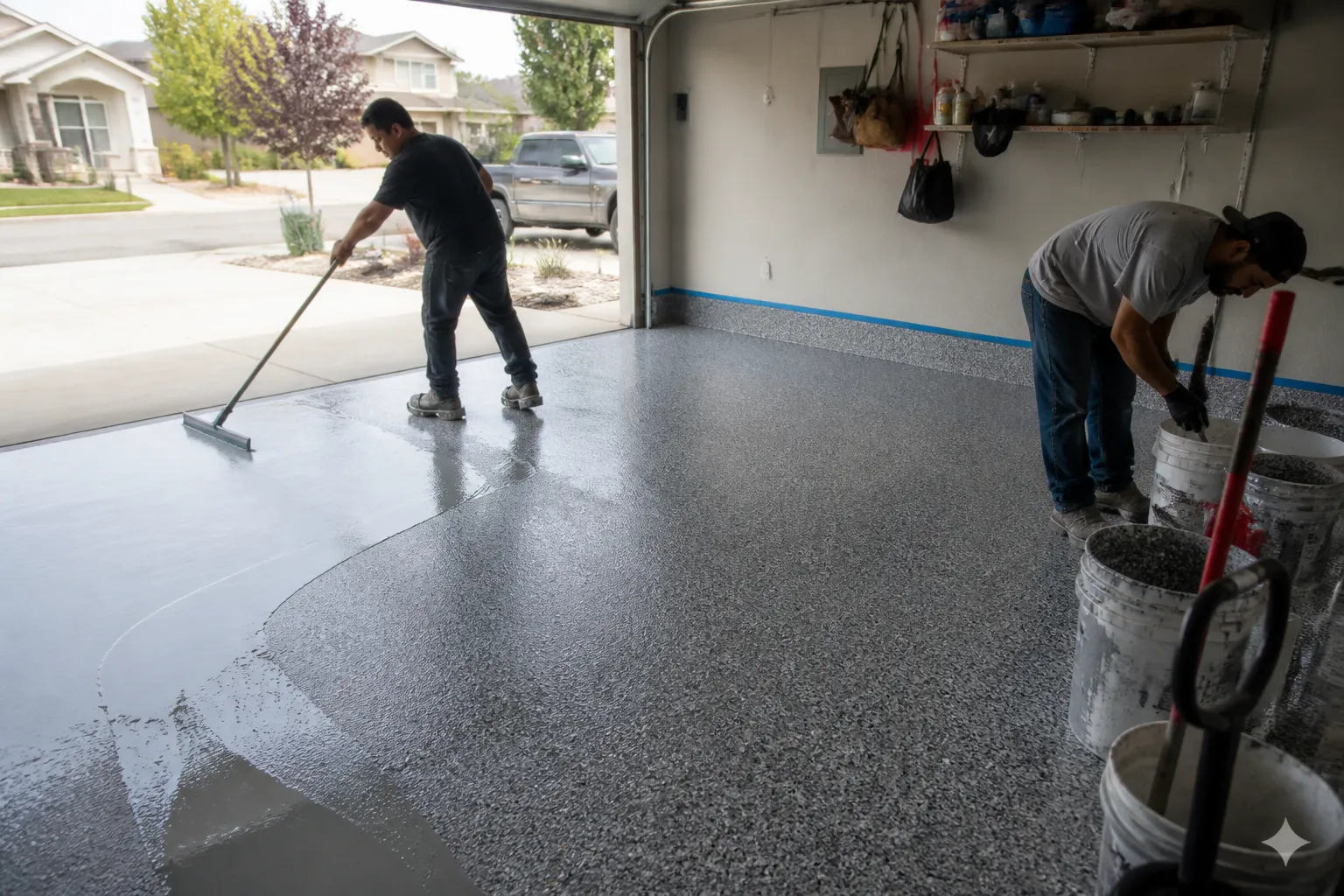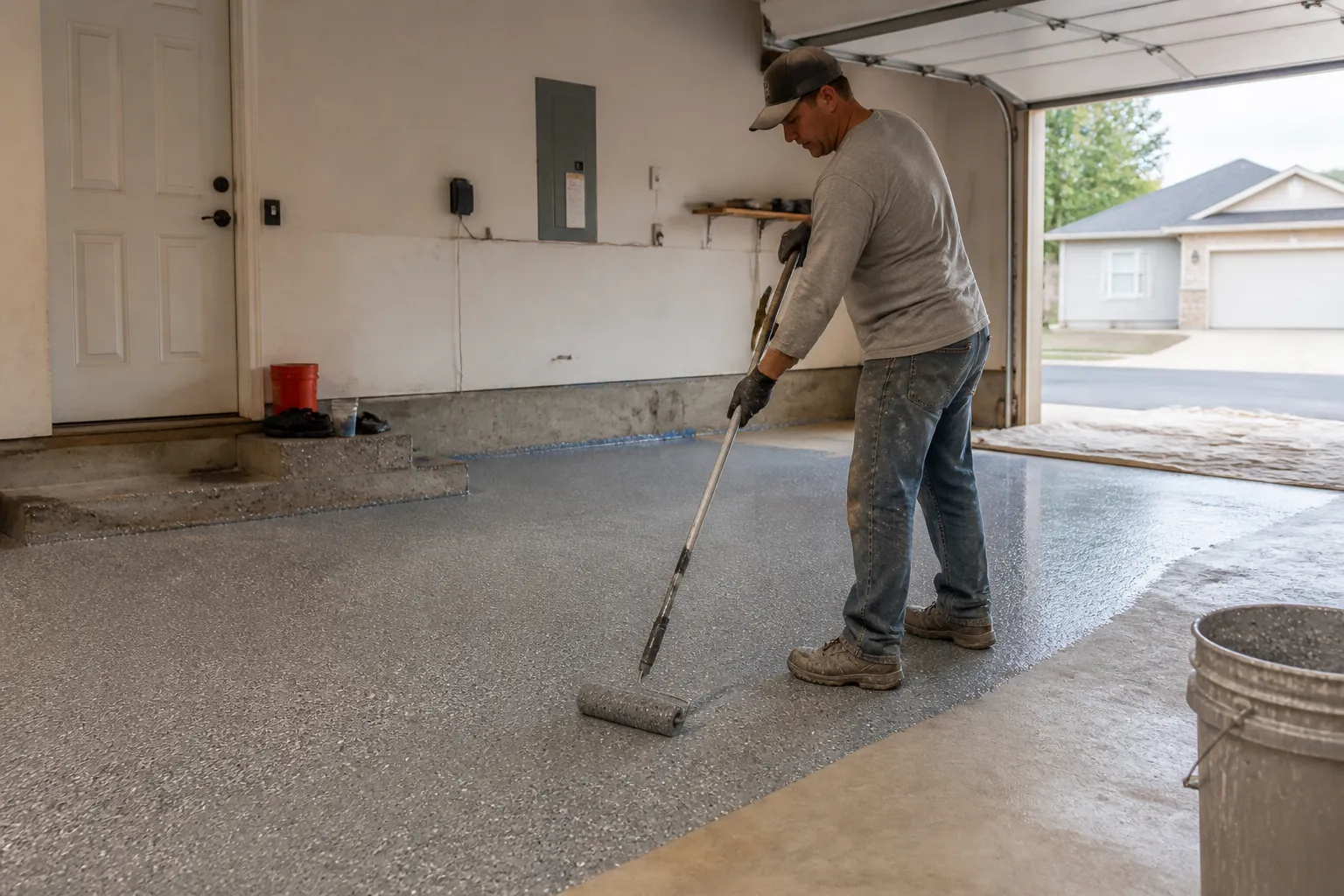
Salt Lake City Epoxy Flooring wrote this guide because floor prep decides whether a coating lasts. Even the best product will peel if the concrete underneath is not ready. Here is what good prep looks like and what you can do before the crew arrives.
Why prep matters
Coatings need a clean, open surface to grip. Smooth, dirty, or damp concrete keeps the coating from bonding, which leads to peeling and bubbles. Most coating failures trace back to prep.
Steps a pro usually takes
- Clear the space: Remove cars, shelves, and stored items.
- Clean: Remove dirt, oil, and old sealers.
- Test for moisture: Damp slabs may need a moisture barrier.
- Grind or blast: Diamond grinding or shot blasting opens the surface.
- Repair: Fill cracks, pits, and spalled areas.
- Vacuum: Remove all dust before the first coat.
Grinding versus acid etching
Some DIY kits use acid etching to rough up the surface. Many pros prefer mechanical grinding because it removes weak surface layers and old coatings more reliably. Ask which method your installer uses and why.
Dealing with oil stains
Oil soaks into concrete. Heavy stains may need degreasers or extra grinding. Coating over oil can cause spots that lift later.
Moisture and Utah slabs
Moisture can rise through concrete from the ground. A simple test can show whether a slab is too damp. If it is, a moisture barrier may be needed. Bob Vila notes a moisture barrier can add about $1 per square foot.
What you can do before install day
- Empty the garage completely.
- Let your installer know about any old coatings or sealers.
- Point out cracks or spots where water collects.
- Plan where to park while the floor cures.
Signs a floor was not prepped well
- Peeling or flaking in the first year
- Bubbles or blisters in the coating
- Hot tire marks that lift the coating
- Cracks that show through soon after install
If you see these on a floor you are thinking about recoating, the old coating will likely need to be ground off first.
How prep affects cost
Prep can be a big part of the price. A clean, newer slab takes less time than one with oil stains, old paint, and many cracks. This Old House lists professional epoxy at $3 to $12 per square foot, and the condition of your slab is a major reason a quote lands low or high in that range. Ask for prep to be listed on its own line so you can see what you are paying for.
New concrete needs time
Freshly poured concrete must cure before it can be coated. It holds a lot of water at first, and coating too early can trap moisture. Ask your installer how long they recommend waiting after a new pour, and whether a moisture test will be done first.
Old coatings and sealers
Paint, old epoxy, and clear sealers can stop a new coating from bonding. They usually need to be ground off. If you are not sure what is on your floor, a water drop test can help. If water beads up instead of soaking in, there may be a sealer or coating present.
Cracks and joints
Control joints are the straight cuts placed in concrete on purpose. Some installers fill them, while others leave them open so the slab can move. Random cracks are usually filled and ground flat before coating. Ask how your installer handles both, since it affects how the finished floor looks.
Checklist for install day
- Garage or room fully emptied
- Cars parked elsewhere for the cure time
- Pets and kids kept away from the area
- Good airflow planned if the product has odors
- A clear plan for when you can walk and park on the floor
Good prep plus clear communication is the best way to get a floor that lasts.
Questions to ask your installer about prep
- Will you grind or shot blast the floor?
- How will you test for moisture?
- How are cracks and joints handled?
- Is crack repair included in the price?
- How do you control dust during grinding?
Clear answers show that the installer takes prep seriously, which is the best sign the coating will last.
Common questions
Can I prep the floor myself?
You can clear and clean it, but grinding and repairs are best left to a pro with the right tools.
How long does prep take?
It depends on floor size and condition. Old coatings and many cracks take longer.
What happens if prep is skipped?
The coating may peel, bubble, or wear out early.