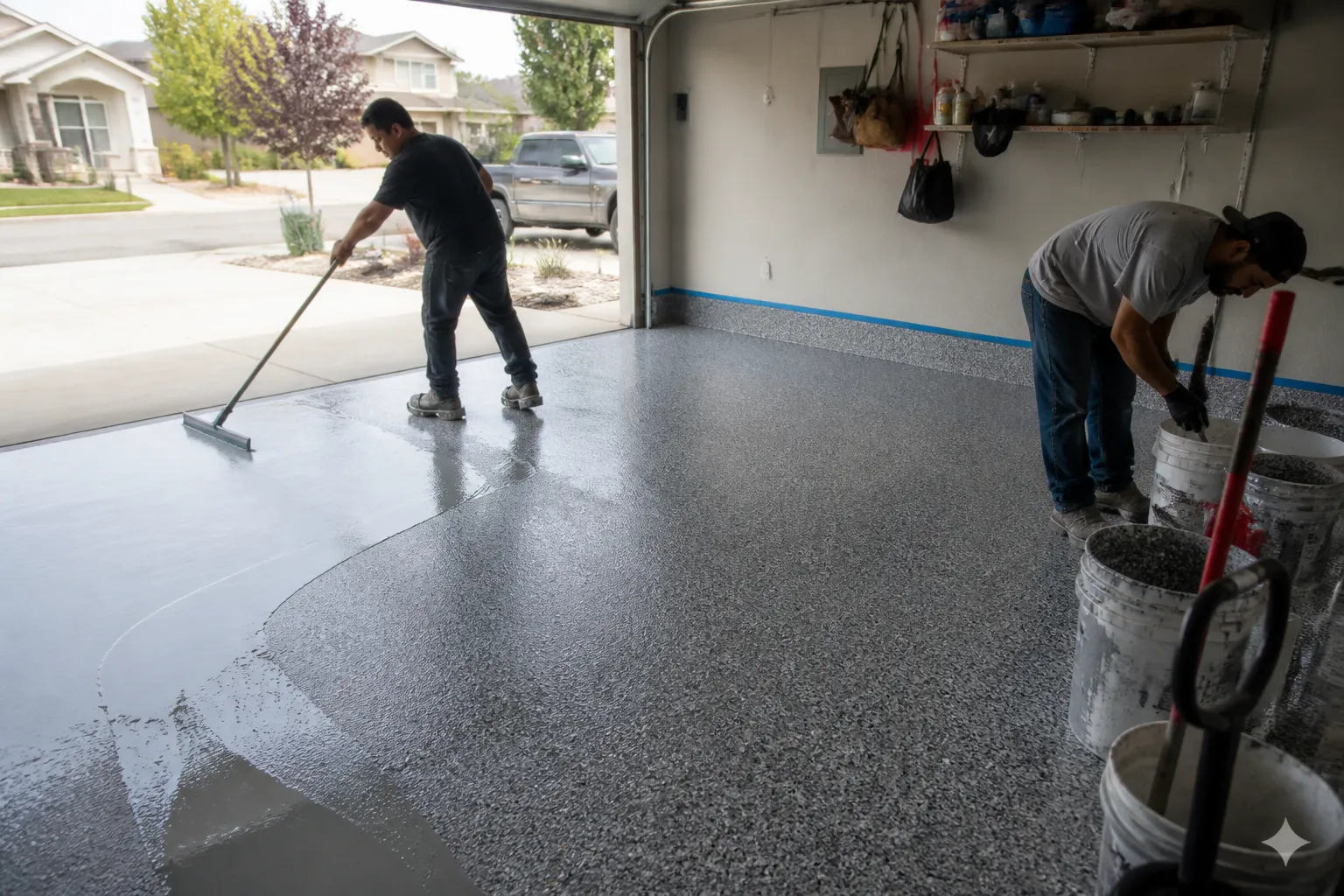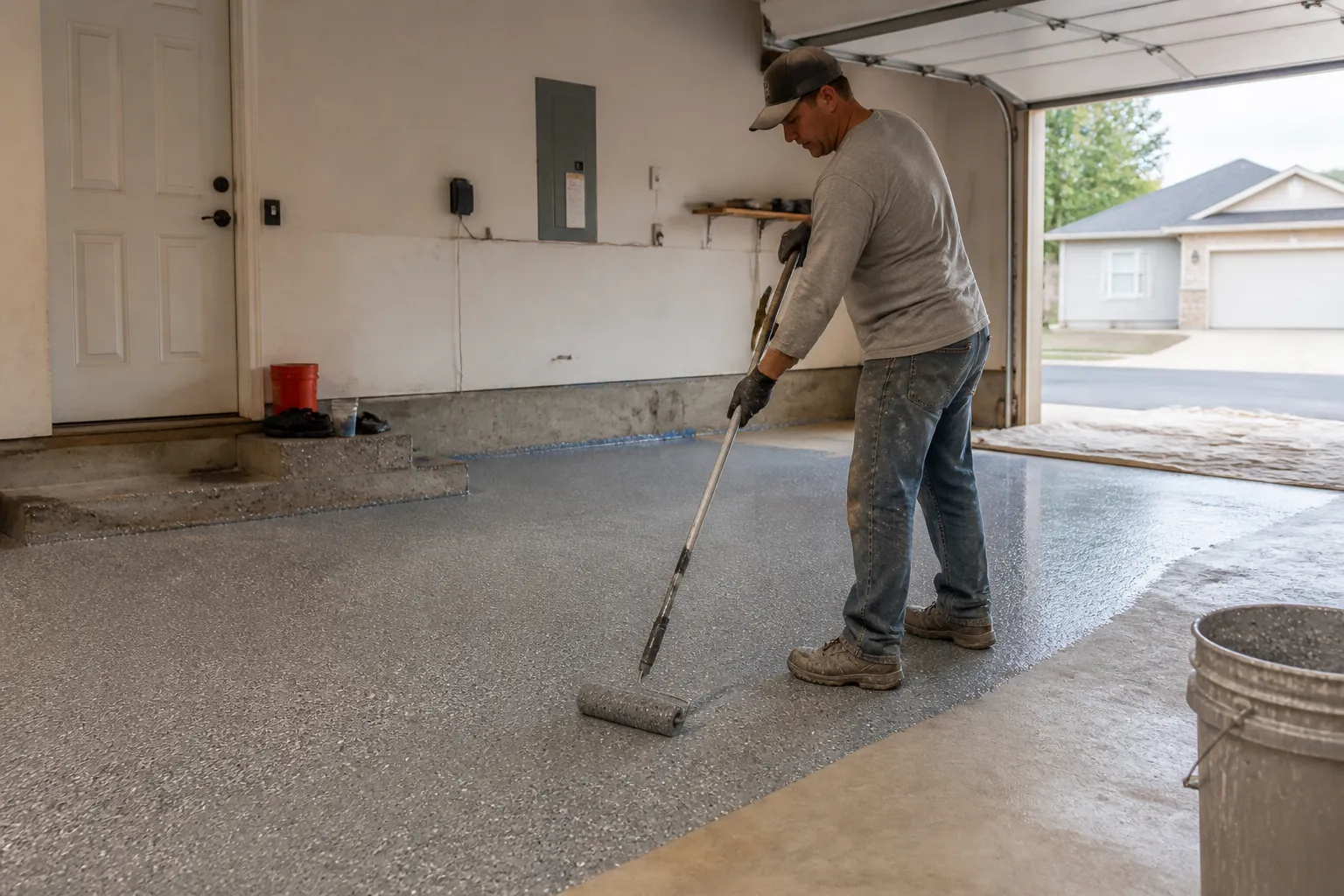
Salt Lake City Epoxy Flooring put this guide together to help you compare two of the most common garage floor coatings. Both can look great and protect concrete, but they differ in how they cure, how they handle sunlight, and what they cost.
What each coating is
Epoxy
Epoxy is a two-part coating that bonds to prepared concrete and cures into a hard surface. It has been used on garage and shop floors for many years.
Polyaspartic
Polyaspartic is a newer type of coating that cures faster. It is often used as a topcoat over a base coat, or as a full system on its own.
Cost comparison
- This Old House lists professional epoxy at $3 to $12 per square foot.
- Bob Vila puts polyaspartic at $4 to $9 per square foot, or about $1,440 to $3,240 for an average garage.
- Angi puts the average epoxy floor at $2,430.
Prices overlap, so the system, prep, and number of coats matter more than the label.
Key differences
Cure time
Polyaspartic usually cures faster, which can shorten the time your garage is out of use. Epoxy often needs longer before you can park on it.
Sunlight
Some epoxies can yellow in direct sunlight over time. Polyaspartic is known for better UV stability, which helps garages with doors that stay open.
Working time
Fast curing means installers must work quickly. That is one reason polyaspartic is usually installed by pros rather than as a DIY project.
Flexibility
Some systems handle temperature swings better than others. Ask how the product you are quoted handles cold winters and hot summers.
Combined systems
Many installers use an epoxy or polyurea base coat with a polyaspartic topcoat. This aims to combine strong bonding with a durable, UV-stable top layer.
How to choose
- If the garage door stays open in the sun, ask about UV-stable topcoats.
- If you need the garage back fast, ask about cure times.
- If budget is tight, ask about a quality epoxy system with good prep.
Care and upkeep for either coating
Both coatings are easy to clean. Sweep or dust mop often, since grit acts like sandpaper under tires and shoes. Wash with mild soap and water, and avoid harsh acids. In winter, rinse away road salt and slush so it does not sit on the surface. Put pads under kickstands and jack stands to avoid point damage. With basic care, either floor will keep its look much longer.
Questions to ask your installer
- Which product brand and system are you quoting?
- How thick is each coat?
- How long until I can walk on it, and when can I park?
- What does the warranty cover, and for how long?
- Can I see a finished floor that is a few years old?
Clear answers make it much easier to compare quotes side by side.
Which coating fits your garage?
Daily driver garage
If you park every day and want the garage back fast, a faster-curing system with a durable topcoat may be worth the extra cost.
Workshop or hobby space
If you work on cars or use chemicals, ask about chemical resistance and how the floor handles dropped tools and jack stands.
Storage garage
If the garage mostly stores items, a solid epoxy system with good prep can be a cost-effective choice.
Color and finish options
Both coatings can be solid colors or include decorative flakes. Flakes hide dust, scuffs, and small imperfections in the slab. They also add texture, which can help with grip. Metallic finishes create a swirled look, and Angi lists metallic epoxy at $5 to $12 per square foot.
Slip resistance
Garage floors get wet from snow, rain, and washing cars. Ask whether an anti-slip additive can be mixed into the topcoat. A little added texture makes the floor safer without changing the look much.
The bottom line
There is no single best coating for every garage. Epoxy can be a strong value when the slab is well prepped and the garage stays out of direct sun. Polyaspartic and combined systems make sense when you need a fast return to use or better UV stability. Whatever you choose, the prep work and the installer’s experience will matter more than the product name on the bucket. Ask to see past jobs and get the system details in writing before you decide.
Common questions
Is polyaspartic better than epoxy?
It depends on your needs. Polyaspartic cures faster and resists UV better, while epoxy can cost less.
Can I use both?
Yes. Many systems use an epoxy base with a polyaspartic topcoat.
Which lasts longer?
Prep and installation quality affect life span more than the coating type alone.